-
Spectrum Wars: Zigbee, Thread & WLAN — Three Wireless Standards, One Band

The 2.4 GHz band is a busy place. It is shared by Wi-Fi, Zigbee, Thread, Bluetooth, and Bluetooth Low Energy, which means many different wireless systems are trying to operate in the same spectrum at the same time. That is exactly what makes this topic interesting: each technology was designed for a different purpose, but…
-
Geo-redundant-cluster with Ruckus Smartzone
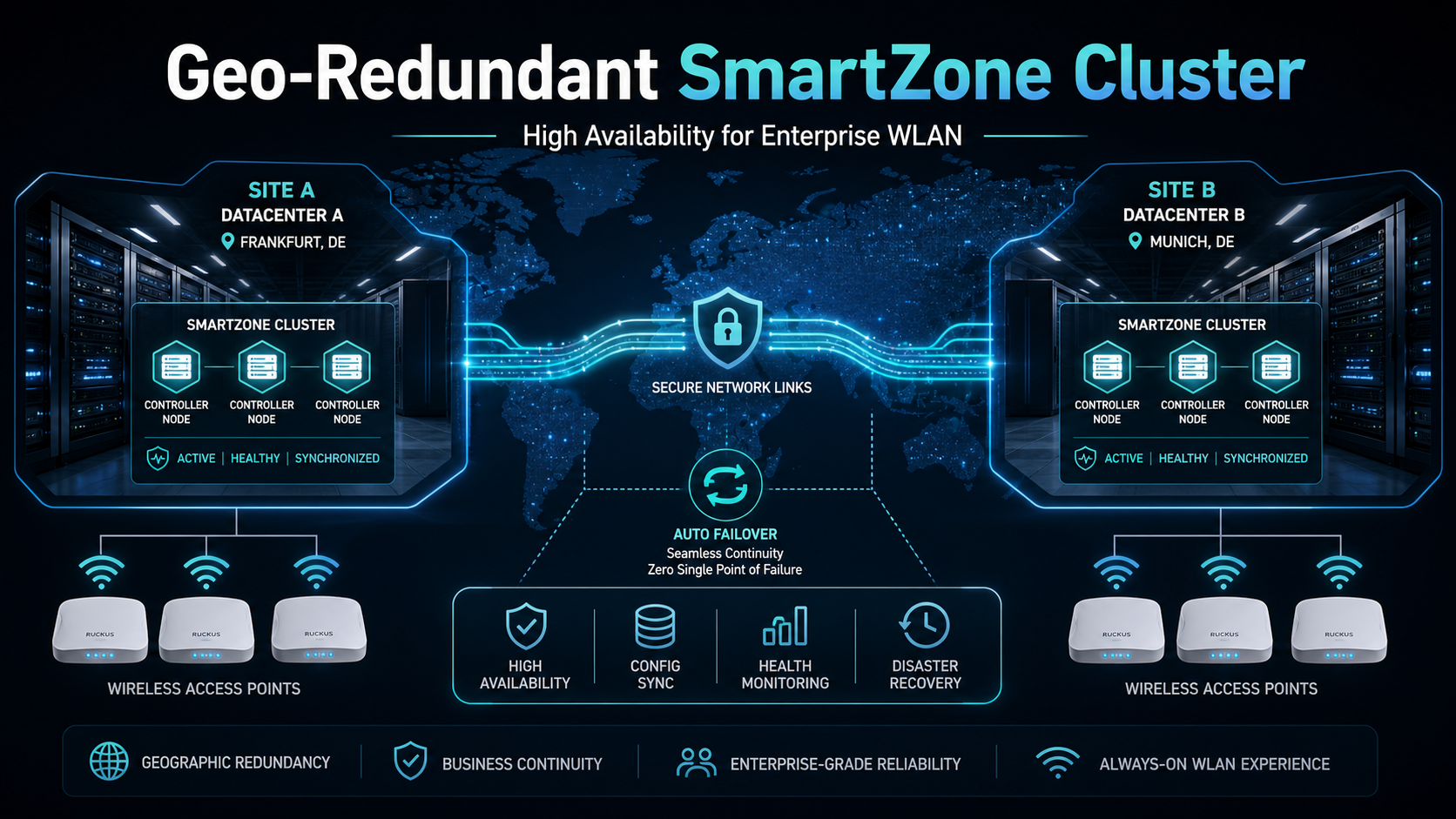
Geo-redundant clustering with RUCKUS SmartZone is a powerful design approach for wireless infrastructures that need high availability beyond a single data center. It combines local cluster resiliency with inter-site failover, so WLAN services can continue even if an entire site or data center becomes unavailable. Why it matters Modern enterprise networks are expected to survive…
-
Performing a site survey with Hamina
A Wi-Fi site survey is the point where wireless design meets real-world physics. No matter how good a predictive model looks on paper, walls, materials, neighboring networks, and user movement will reshape the RF environment the moment the network goes live. Hamina is designed to make that validation step fast, practical, and repeatable, with a…
-
Virtual Controllers vs. Hardware Controllers: Pros and Cons for Enterprise Wireless

Enterprise Wireless Wireless controllers are used to centralize policy, manage access points, and keep Wi-Fi networks consistent across sites. In many enterprise environments, the choice is no longer just “controller or no controller,” but also virtual appliance or dedicated hardware. A virtual controller runs as a VM on shared infrastructure, while a hardware controller is…
-
Patience

The old blog is moving to this new location. Please give me some time to finish the moving.
-
Performing a site survey with Ekahau
Designing a reliable Wi-Fi network is never just about placing access points on a floor plan. Real buildings introduce attenuation, reflections, interference, and user behavior that can only be understood through proper measurement, which is why site surveys remain one of the most important parts of professional WLAN design and validation. Ekahau has become one…
-
Wi‑Fi Deauthentication Attacks: How They Work and How to Defend Against Them
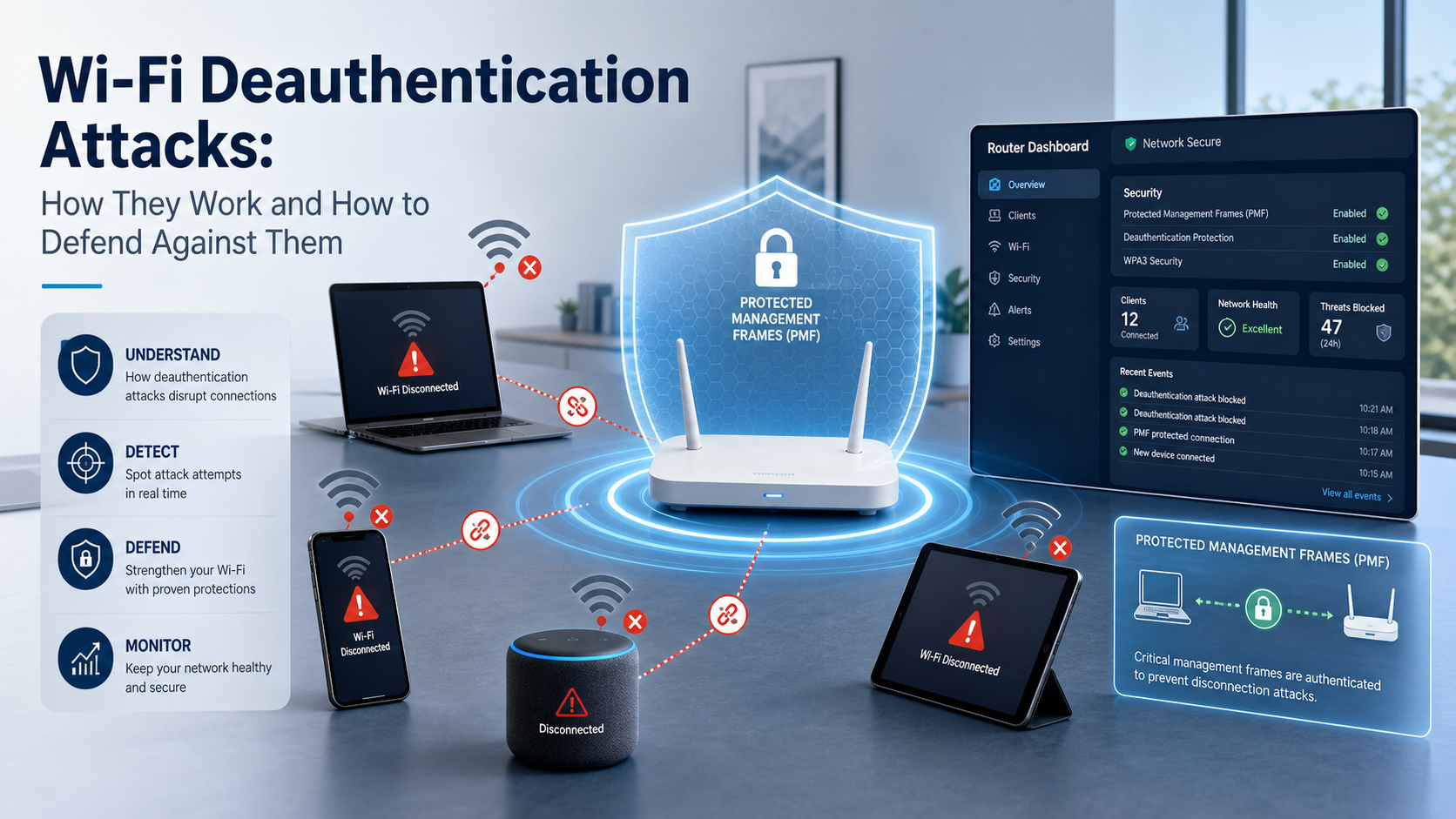
Wi‑Fi deauthentication attacks abuse management frames to forcibly disconnect devices from a wireless network. In older WPA and WPA2 deployments, those frames were not authenticated, so an attacker could spoof the access point and make a client believe it had been disconnected. The impact is usually denial of service rather than direct compromise. But the…
-
Hacking WiFi passwords with Kali

How to Crack Wi-Fi Passwords Using Kali Linux Cracking Wi-Fi passwords is a task commonly performed in penetration testing and ethical hacking, where security professionals test the vulnerability of wireless networks. Kali Linux, a powerful penetration testing distribution, contains various tools that can help with these tasks. However, it is important to emphasize that performing…
-
Sending deauthentication packets with Kali

How to Send Deauthentication Packets Using Kali Linux Deauthentication attacks are a type of denial-of-service (DoS) attack that targets Wi-Fi networks. These attacks are typically used to disconnect devices from a wireless access point by sending deauthentication packets. In this article, we will explore how to send deauthentication packets using Kali Linux, one of the…
-
Tunneled SSIDs: Benefits and Trade-Offs in Enterprise Wi-Fi

A tunneled SSID is a wireless network in which client traffic is encapsulated and sent to a central controller, firewall, or gateway before it reaches the rest of the network. This design is common for guest Wi-Fi, centralized policy enforcement, and scenarios where traffic needs to be isolated from the local LAN. The main appeal…